
Dhaka’s Culinary Quiet Storm: How Panda Dumplings Perfected Authenticity

2021 was an eventful year in Bangladesh. The arrival and initial rollout of the COVID-19 vaccine brought a wave of relief. The nation marked a crucial milestone toward graduating from Least Developed Country (LDC) status. On the sports fields, the Under-19 Girls’ Football Team delivered a huge source of pride by securing the SAFF championship.
Lost in these major headlines, another quiet yet significant event was unfolding in Dhaka: a restaurant named Panda Dumplings (PD) opened its first branch in Gulshan-2, offering something the city rarely saw - authentic Chinese food at an affordable price.
The Unbroken Tea Tradition
Our introduction to this distinctive cultural outpost came in March 2025. When we first met Rayhan Kabir, the co-owner who manages PD alongside his Chinese partners, he embodied the spirit of a dedicated host. He was warm, focused, and deep in his paperwork, but he smiled, waved us to a table, and promised five minutes.
That promise of time was immediately accompanied by two small, handleless Chinese teacups filled with steaming herbal tea. The five minutes stretched into three hours of conversation, during which our cups were never empty. This was our first immersion into a powerful piece of Chinese tradition: serving tea continuously, where the host’s act of pouring is a constant gesture of hospitality. This authentic, generous spirit immediately signaled how deeply rooted the Chinese culture is at PD.
Ten months later, we returned to the Gulshan-2 branch, drawn by the success of their second outlet in Dhanmondi (opened November 2025), eager to hear Mr. Kabir’s story.
The Authentic Exception in a Fusion World
In Bangladesh, the term "Chinese food" has long been synonymous with a locally loved, spicy, fusion cuisine. Panda Dumplings, however, intentionally breaks this mold.
“Don't get me wrong, that fusion food is delicious, and there are many great restaurants doing it,” Mr. Kabir stressed. “But my partners and I wanted to bring the honest, authentic flavors- the ones you find in Beijing or Sichuan - to Dhaka.”
This commitment to authenticity is a central feature. The tantalizing aroma of roasting duck often hangs in the air, a scent customers can trace to the transparent glass walls covering the kitchen. This not only assures customers of the kitchen’s cleanliness but offers a little humor and theatre - you can see precisely why that duck is smelling so good (you know, you know).
Mr. Kabir admits his bold vision for a rapid chain expansion has paused, but the success of the new Dhanmondi branch confirms the public's appetite for their niche.

The Technology that Solved a Cross-Cultural Hurdle
Running two authentic establishments and managing quality requires more than just skilled chefs; it demands sharp operations. Mr. Kabir found his solution in Quickly’s flagship SaaS product, RestroGreen, a comprehensive Restaurant Management System (RMS).
“If you own a restaurant, you eventually feel the urge to make your own software,” he laughed, echoing a sentiment common among entrepreneurs. “We used another software before, but RestroGreen is simply the best in the country right now.”
The system’s biggest operational win is addressing the communication gap that often plagues specialized restaurants. Because PD attracts many foreigners looking for authentic Chinese cuisine, there was always a chance of error when staff took manual orders.
RestroGreen solved this with one feature: QR Table Ordering. Customers simply scan the code at their table and place their order directly. The entire operation is then automated: the order is confirmed by an attendant, syncs with the POS, and is disbursed efficiently to the multi-kitchens.
This streamlined flow has reduced communication issues to the bare minimum, ensuring both guests and staff leave the interaction smiling. Mr. Kabir himself monitors the entire process, checking on pending and completed orders via the Backoffice on his iPhone.
The Cost of Excellence
Mr. Kabir was candid about his experience switching to the new system, acknowledging that an excellent tool often requires a significant investment in time and people.
“The biggest operational challenge we faced after switching to RestroGreen was the initial training time needed for long-time staff members,” Mr. Kabir admitted. “Because the system is so robust with features like multi-kitchen disbursement and detailed Backoffice reports it took a dedicated few weeks to get everyone comfortable with the new digital workflow. You’re essentially asking people to move from handwritten tickets to streamlined, tablet-based confirmations, and that requires real patience.”
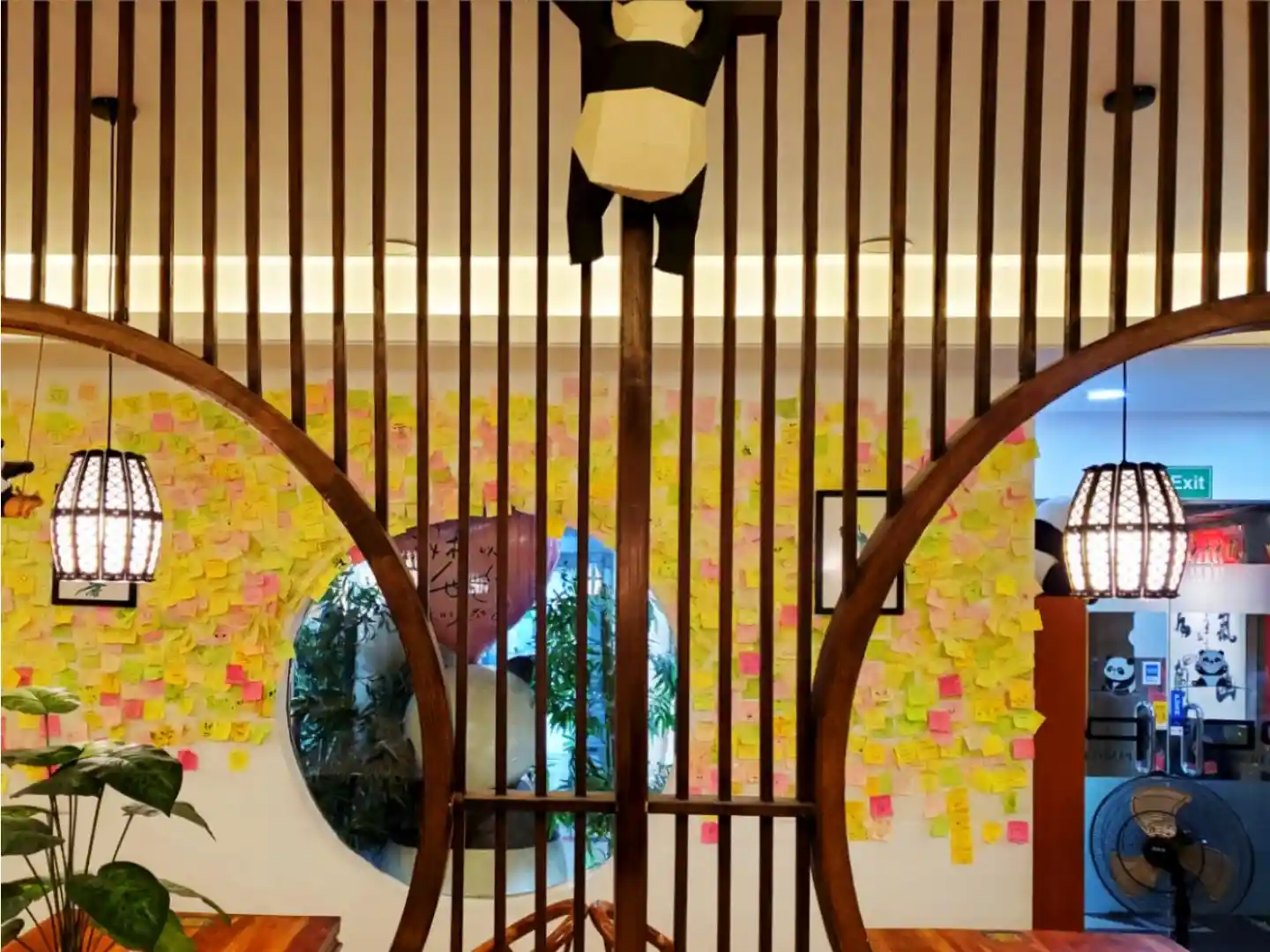
As we concluded, the atmosphere was genuinely warm. Staff smiled readily, and the walls were adorned with a mosaic of customer feedback written on sticky notes. Statues of pandas the wild, the monk, and the cuddly greeted us on the way out.
Panda Dumplings is a successful blend of cultural integrity, affordability, and smart technology. It is a restaurant where the simple serving of tea shows as much heart as the food on the plate, proving that the vision for a chain is merely a matter of time.